SERIOUS3D in Art and Architectural History
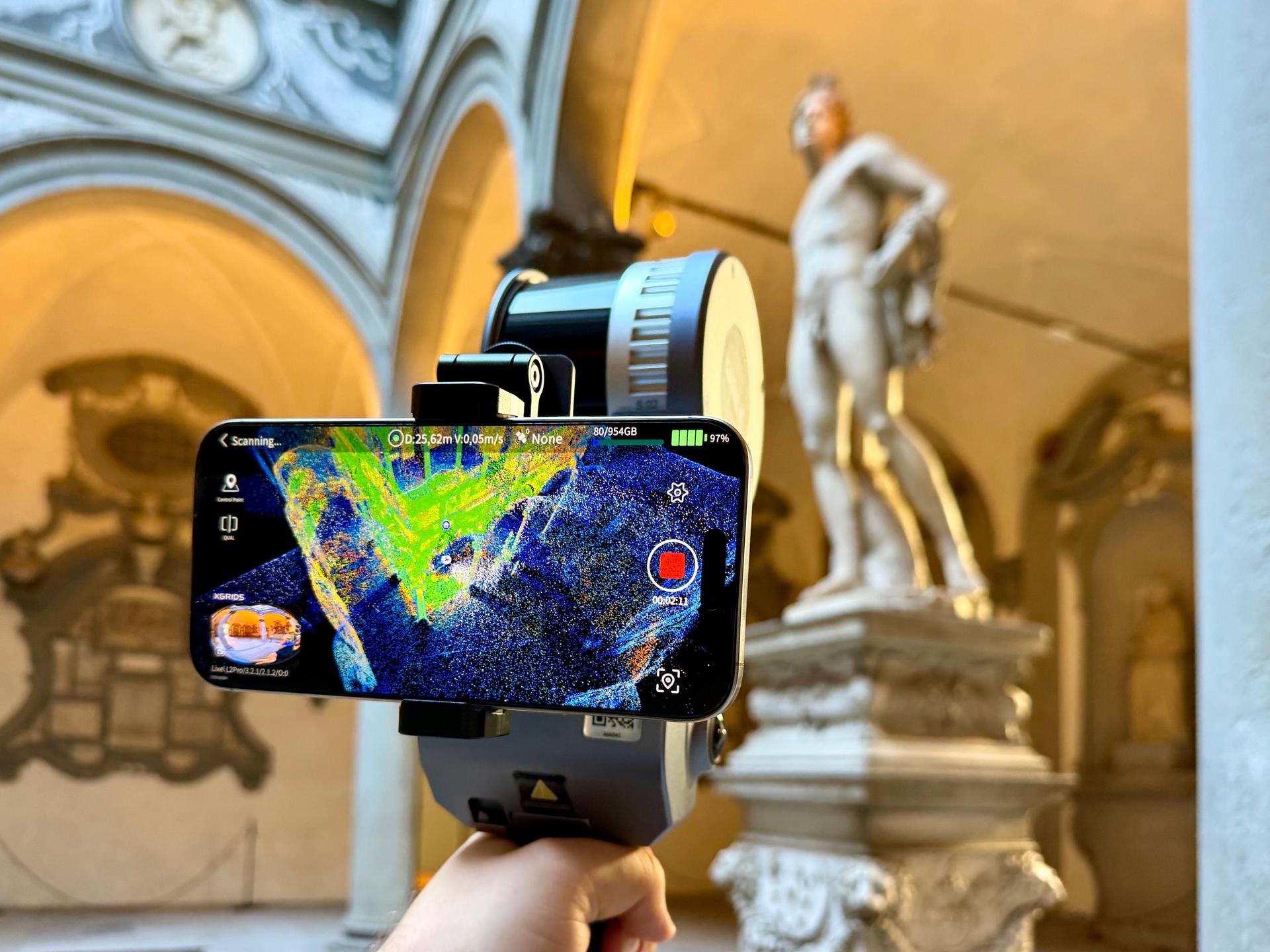
Rapid advances in data acquisition and processing open exciting opportunities for object-related disciplines but pose challenges for humanities scholars. SERIOUS3D addresses these challenges with an interdisciplinary research project that leverages digital tools and methodologies to develop a workflow model across art and architectural history, building information modelling, and information technology.
SERIOUS3D aims to transform the role of digital models in humanities research by developing new standards for Historic Building Information Modelling (HBIM) and Linked Open Data (LOD). Rather than serving simply as tools for documentation or visualisation, these models can function as dynamic scholarly frameworks, integrating different forms of knowledge within an open and sustainable environment. The project’s case study is Palazzo Medici, chosen not only for its historical importance but also for its extensive and challenging documentary record, making it an ideal proof of concept for new approaches to heritage modelling.
The digital model of Palazzo Medici will demonstrate how a complex historic monument can be represented as a layered and evolving knowledge space, capable of accommodating architectural transformations over time, dispersed artworks, competing scholarly interpretations and the uncertainties inherent in historical research. Its capacity to embed, annotate and link to its sources – while also recording and reflecting on the processes through which it has been created – should withstand the same rigorous peer-review processes as a conventional, non-digital research output.
From an architectural engineering perspective, the project aims to develop and evaluate HBIM as a sustainable digital environment for documenting, preserving and researching heritage structures. The team will investigate data acquisition and processing, normative frameworks, modelling guidelines, delivery specifications, classification systems and Level of Information Need. It will assess the consistency and quality of modelled data, extending the buildingSMART Data Dictionary and harmonising it with the relevant thesauri and controlled vocabularies. It will also examine object-oriented 3D modelling and role-/model-based communication, developing methods to preserve Industry Foundation Classes (IFC) object hierarchies and building-element metadata when HBIM models are transferred into open environments.
Finally, the data science goals of the project are to transform and enrich HBIM data through semantic technologies and Knowledge Graphs. It will investigate the transformation of structured IFC data through Web Ontology Language and EXPRESS schemas, integration with CIDOC-CRM and other ontology extensions, and links between HBIM objects and relevant LOD resources. It will establish approaches for persistent identifiers and metadata alignment, supporting FAIR and Open Science principles as well as reliable citation and long-term accessibility of digital research data. The Semantic Kompakkt toolchain will be extended to support HBIM models, and Art & Architecture Thesaurus terminology annotation, enabling cross-institutional data integration and access.